The Nasrid Palaces room by room: what to see and where to stop
The Nasrid Palaces are the reason the Alhambra is famous all over the world. They are not one palace but three, built by different sultans in the 14th century and joined into a single route that you walk in one direction. You enter at a fixed time and, once you leave, you cannot go back in. This guide takes you through them in order so you know where to stop.
Before you go in
- Be at the entrance before your time slot, with your ticket and the ID used to buy it. See what the time on your ticket means.
- Count on about an hour inside. There is no hurry, but the route is one-way.
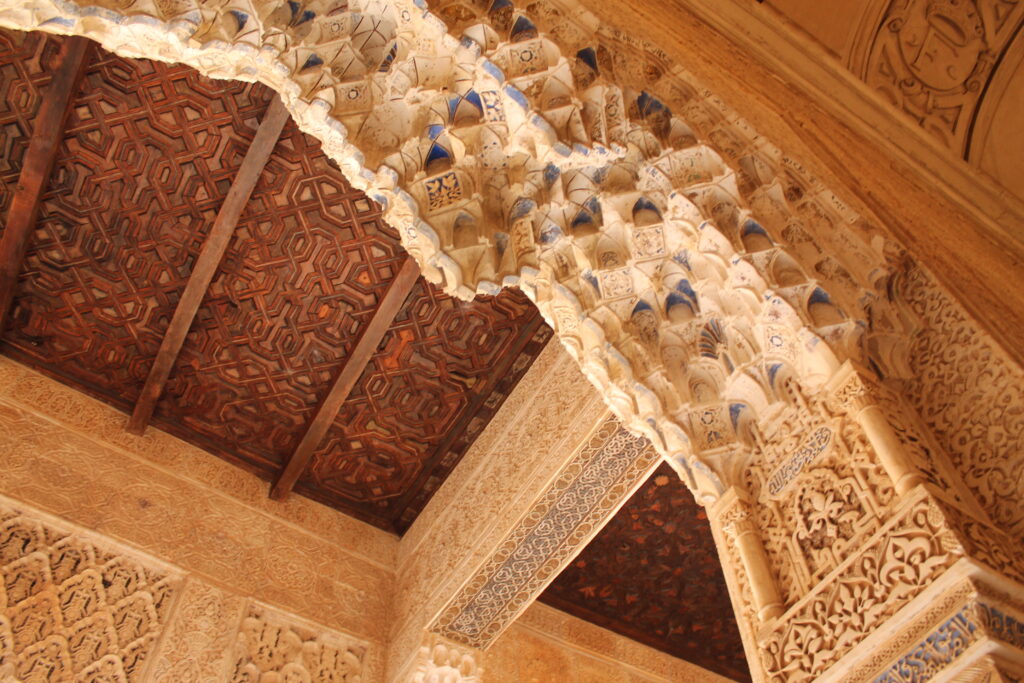
- Look up, look down and look closely. The decoration is in the details.
1. The Mexuar: where the sultan governed
The oldest part of the palaces, used for audiences and for the council of ministers. After 1492 the Christians turned its main hall into a chapel, and you can still see that mix of periods. Do not miss the Cuarto Dorado (Golden Room) and, opposite, the façade of Comares: a wall of plasterwork with two doors, one leading to the official palace and one to the service areas. It was the stage on which the sultan showed himself to his visitors.
2. The Comares Palace: the official palace
The Court of the Myrtles
A long rectangular pool framed by two hedges of myrtle, with the Comares Tower reflected in the water. It is one of the most photographed images of the Alhambra, and also one of the calmest. Stand at the south end, with your back to the gallery, for the classic reflection.
The Hall of the Ambassadors
Inside the Comares Tower is the throne room, the largest hall of the palaces. Its wooden ceiling, made of thousands of pieces of inlaid wood, represents the seven heavens of Islamic tradition, with the throne of God at the centre. The sultan sat under it, facing the door, with light coming from behind him. Few rooms in the world say “power” so clearly.
In the Hall of the Ambassadors, the sultan sat under the seven heavens. The message for every visitor was clear.
3. The Palace of the Lions: the private palace
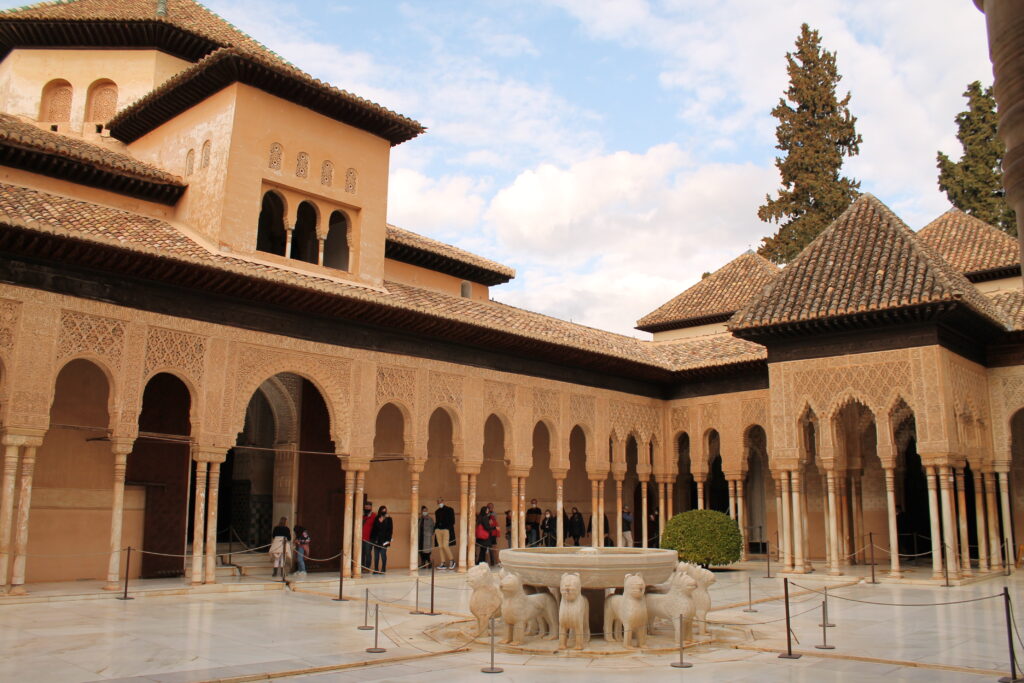
The Court of the Lions
The most famous courtyard of the Alhambra, built under Sultan Muhammad V: a forest of slender marble columns around a fountain held up by twelve lions. Everything here is about water and paradise. It has its own article: the Court of the Lions, explained.
The Hall of the Abencerrajes
On the south side, with a star-shaped muqarnas dome and a fountain in the floor. According to legend, the knights of the Abencerraje family were beheaded here, and the reddish stains in the fountain are their blood. Read the story in legends of the Alhambra.
The Hall of the Kings
At the east end, with three alcoves whose ceilings are covered by rare paintings on leather, showing scenes of knights, hunts and a gathering of ten seated figures, perhaps Nasrid rulers.
The Hall of the Two Sisters and the Mirador de Lindaraja
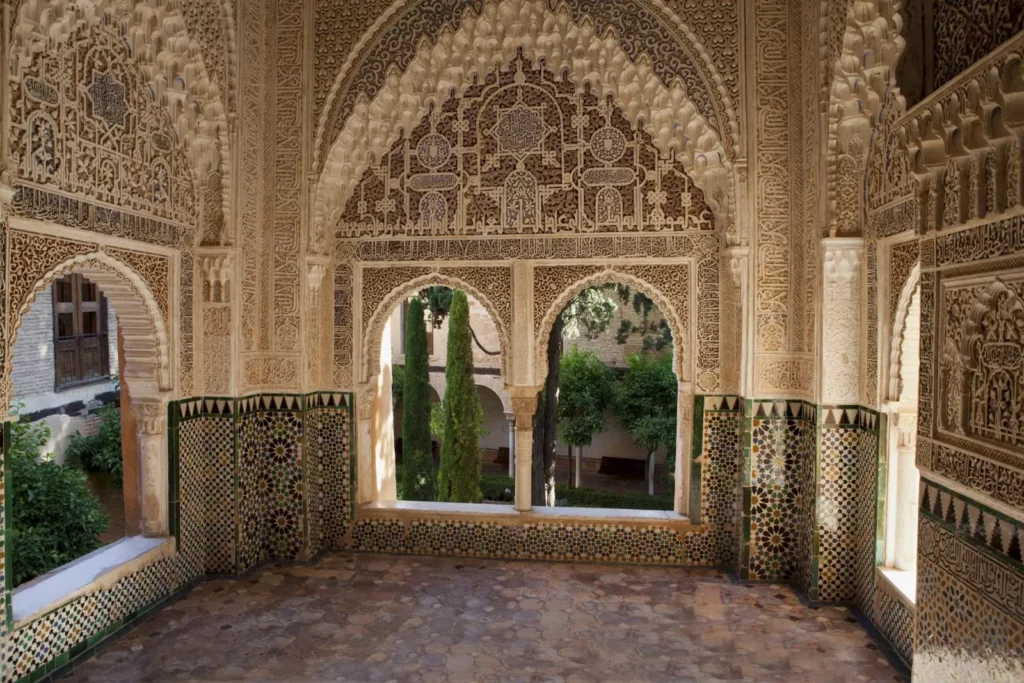
On the north side, named after two twin marble slabs in the floor. Above, the most spectacular muqarnas dome of the Alhambra. At the back, the small Mirador de Lindaraja, a balcony of plaster and tiles that once looked over the landscape and now opens onto a quiet garden courtyard.
4. The way out: Irving’s rooms and the Partal
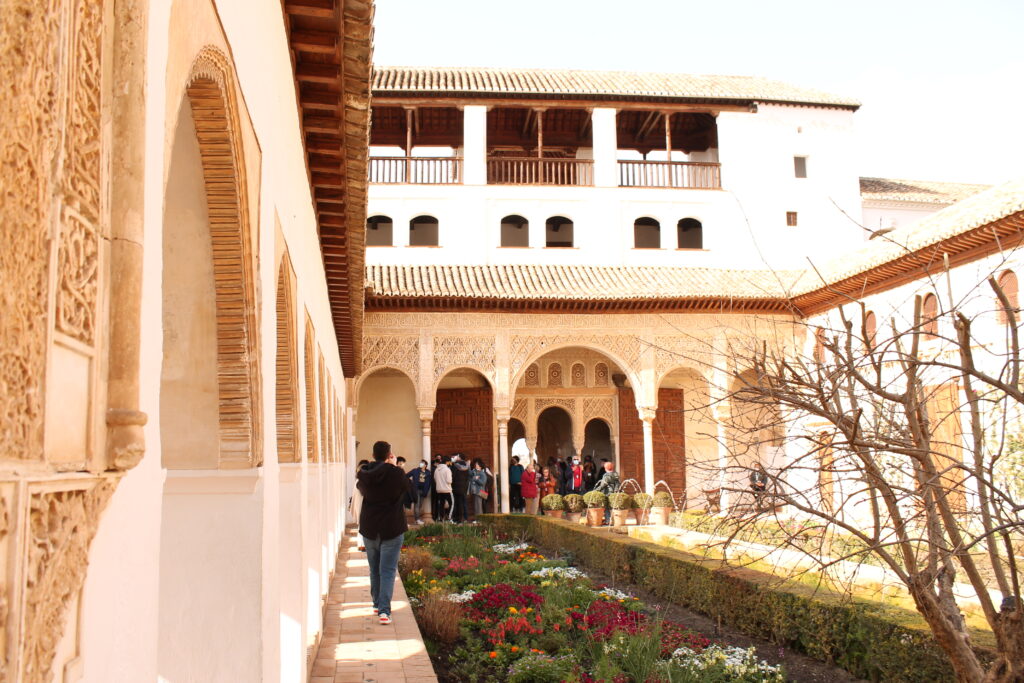
The route continues past the rooms built for Emperor Charles V, where the American writer Washington Irving lived in 1829 and wrote part of his Tales of the Alhambra (a plaque recalls it), and past the Lindaraja garden. You leave the palaces towards the Partal, with its pool and the Ladies’ Tower, and the path that leads to the Generalife.
Details not to miss
- The Nasrid motto, “There is no victor but God”, all over the walls: how to spot it.
- The tile skirtings (alicatados), with geometric patterns made of hundreds of cut ceramic pieces.
- The water channels in the floor that link fountains and rooms.
- The views of the Albaicín through the windows of the Comares Tower.
With a certified guide, the hour inside the Nasrid Palaces is very different: you know where to stop, what each room was for and what the walls are saying. See our guided tours of the Alhambra.