Muqarnas: the honeycomb ceilings of the Nasrid Palaces
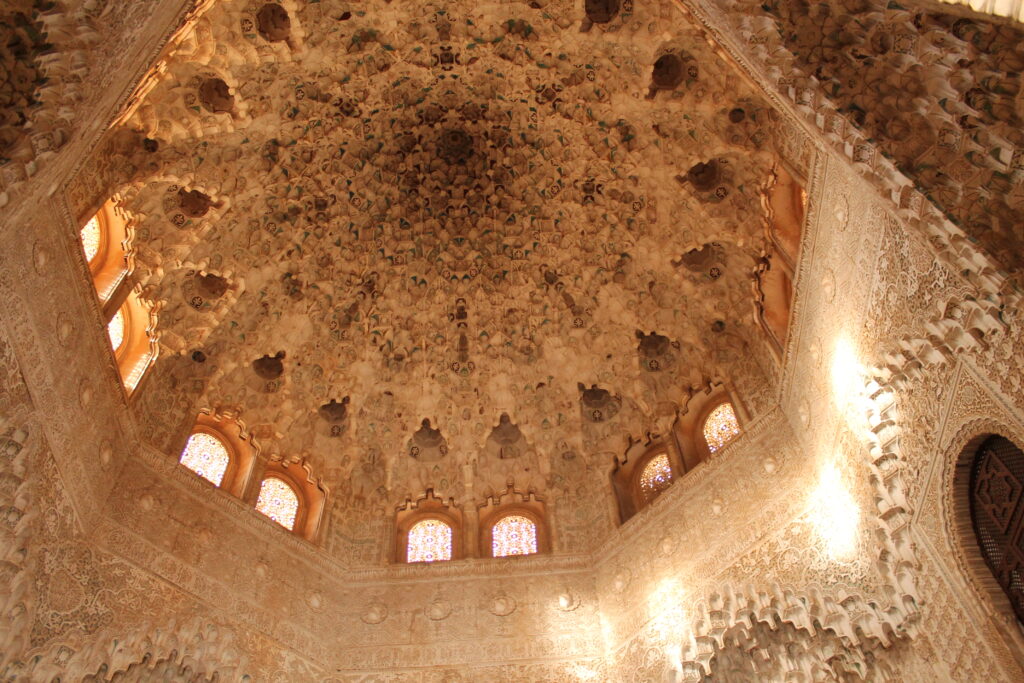
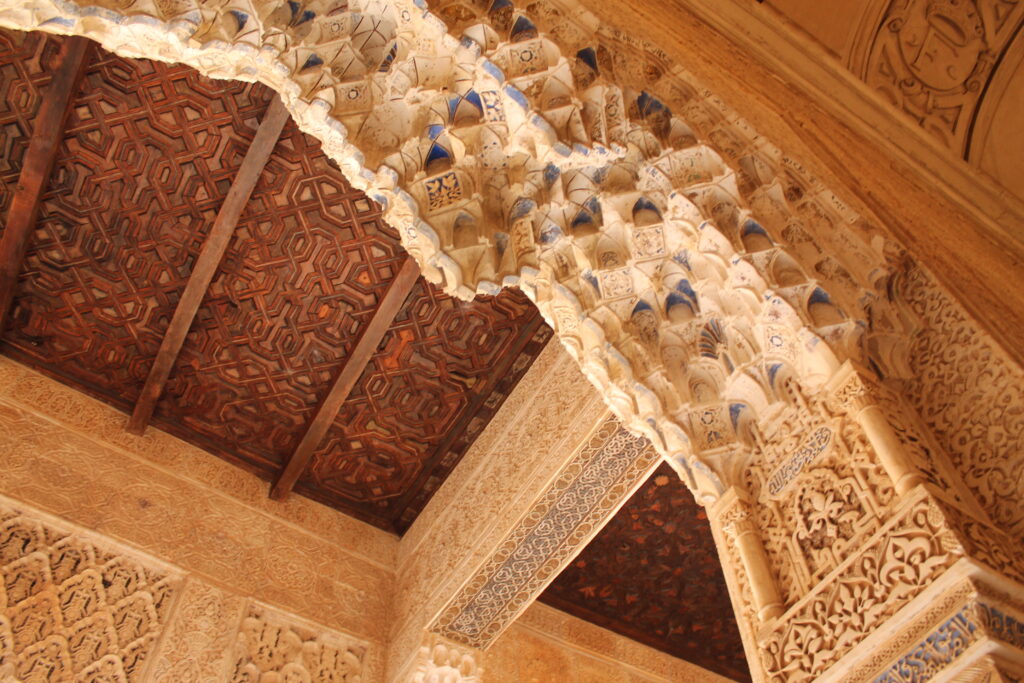
Sooner or later, every visitor to the Nasrid Palaces stops, looks up and goes silent. Above them, the ceiling seems to melt into thousands of tiny cells, like a honeycomb or a cave of stalactites. These are muqarnas, known in Spanish as mocárabes, and the Alhambra has some of the most spectacular examples in the world.
What muqarnas are made of
A muqarnas vault is not carved from a single block. It is assembled from many small prisms of plaster or wood, in a handful of basic shapes, stacked in tiers that project a little further at each level. With a limited set of pieces, the Nasrid craftsmen could build almost any curve: a puzzle with very simple rules and endless results.
The pieces were made in moulds, assembled on the ground or in place, and then fixed to a light structure of wood hidden behind them. The effect is of a heavy stone ceiling, but in reality it is surprisingly light, which also helps the building cope with the earthquakes that Granada suffers from time to time.
Where to see the best muqarnas in the Alhambra
- Hall of the Two Sisters. Its dome is one of the masterpieces of Islamic art: an eight-sided canopy made of some five thousand cells around a central star. A poem by Ibn Zamrak on the walls compares it to the sky.
- Hall of the Abencerrajes. Facing it across the Court of the Lions, with a star-shaped dome that seems to turn as the light changes. This is also the room of the most famous legend of the Alhambra.
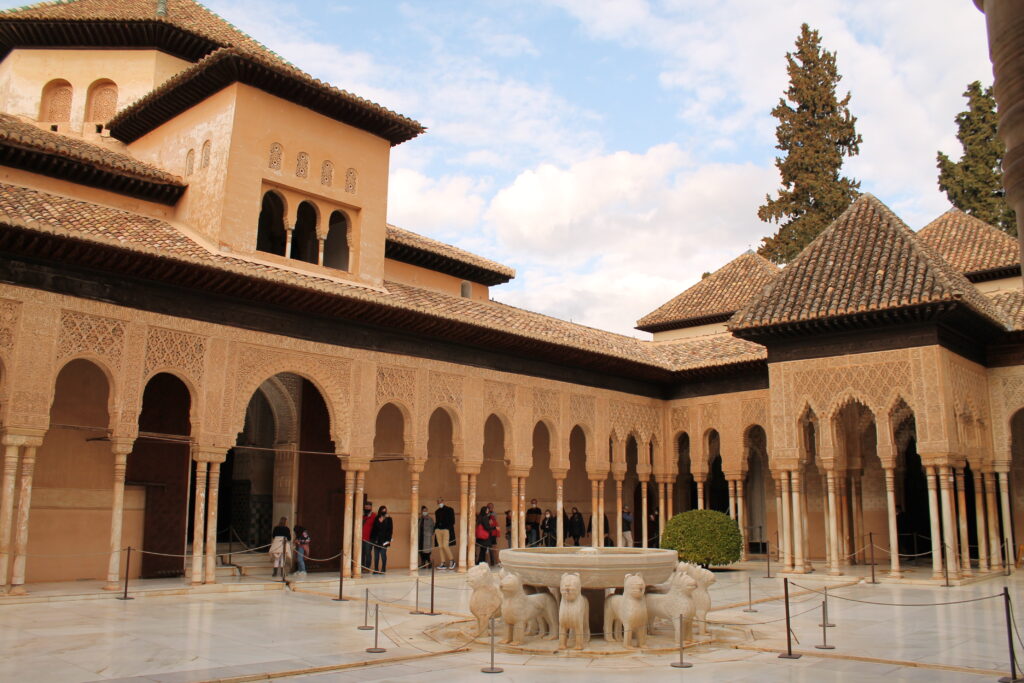
- The arches of the Court of the Lions. Smaller muqarnas soften the arches and decorate the two pavilions at each end of the courtyard.
- Hall of the Kings. At the far end of the Court of the Lions, with muqarnas arches leading to its famous painted leather ceilings.
Muqarnas are not made to be seen once. They are made to change every hour, with every ray of sun that comes through the windows.
Light as a building material
The small windows at the base of the domes are not there by chance. As the sun moves, each cell catches the light differently, so the vault is never the same at ten in the morning and at five in the afternoon. Many scholars read these domes as an image of the heavens turning slowly above the sultan’s court, and the inscriptions around them support that reading.
Where does the idea come from?
Muqarnas appeared in the Islamic world around the 10th and 11th centuries, in places as far apart as Iran, Iraq and North Africa, and spread across the Mediterranean. By the 14th century, when the Palace of the Lions was built under Sultan Muhammad V, Nasrid craftsmen had taken the technique to an extraordinary level of complexity.
A tip for your photos
Stand right in the centre of the room, hold your phone flat with the camera facing up and use the wide-angle lens. Then put the phone away for a minute: the best way to understand a muqarnas dome is to watch it in silence. Keep in mind that the time inside the Nasrid Palaces is limited, so it helps to know in advance which rooms you want to stop in. Our guide to what to see in the Nasrid Palaces lists them in order.
On our guided tours of the Alhambra, the guide stops under these domes and explains how they were made, so you can enjoy them instead of hunting for them.