The Court of the Lions: the courtyard that explains the Alhambra
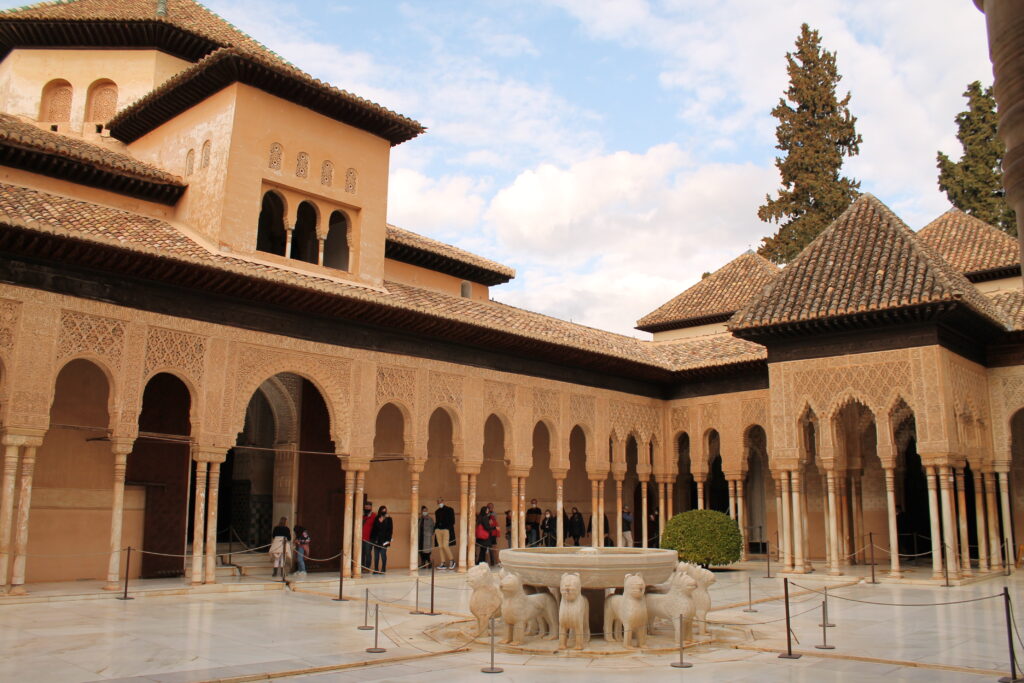
If there is one image that sums up the Alhambra, it is this one: a courtyard of slender white columns, lace-like arches and, in the middle, a fountain held up by twelve stone lions. The Court of the Lions is the heart of the Nasrid Palaces and one of the most admired spaces of Islamic art in the world. Here is how to read it.
Who built it, and why
The Court of the Lions is the centre of the palace that Sultan Muhammad V built in the second half of the 14th century, at the height of Nasrid power. It was not a public space: it was the private, residential palace of the sultan, organised around a courtyard-garden and surrounded by halls for living, celebrating and receiving.
A courtyard that represents paradise
Look at the floor. Four channels start from the central fountain and run towards the four sides of the courtyard, where they meet small fountains inside the halls. This plan, a garden divided into four by water, is the classic image of paradise in Islamic tradition, where four rivers flow. The columns, more than a hundred of them, grouped in ones, twos and threes, are often read as the trunks of a palm grove around an oasis.
Stand in a corner of the gallery and look across the courtyard: the columns move like trees as you walk.
The Fountain of the Lions
Twelve marble lions hold a large twelve-sided basin. Water comes out of their mouths and, originally, also rose from the centre of the basin. Around the rim runs a poem by Ibn Zamrak, the court poet, which praises the sultan and describes the fountain itself, comparing its water to melting silver and its lions to fierce guardians that hold back their fury out of respect for the king.
Where the lions come from is one of the Alhambra’s great debates. They are older in style than the courtyard, and one theory links them to an 11th-century palace of the Jewish vizier Samuel ibn Naghrela, on the same hill. Whatever their origin, they are one of the rare figurative sculptures in Nasrid art.
A restoration that brought it back to life
For years the lions were covered by layers of dirt and old repairs, and the fountain had stopped working as it was designed. A long restoration, completed in 2012, cleaned the lions, repaired the hydraulic system and returned the courtyard floor to a design closer to the original. Today you see the court much as the Nasrids did, with the water running again.
The halls around the courtyard
- Hall of the Abencerrajes (south): a star-shaped muqarnas dome and the most famous legend of the Alhambra.
- Hall of the Kings (east): three alcoves with medieval paintings on leather.
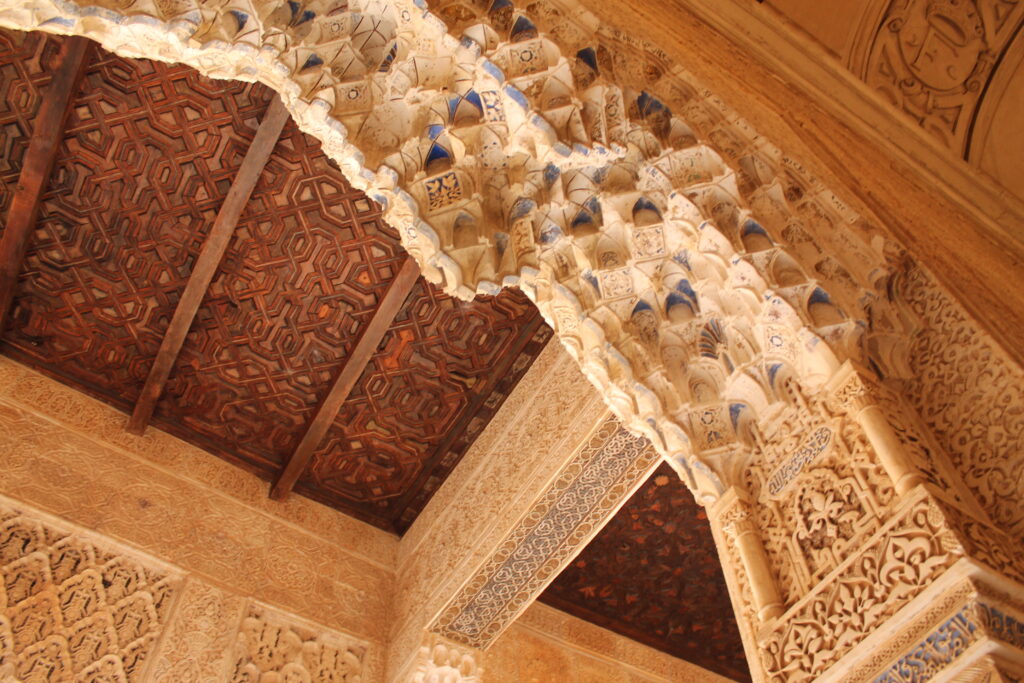
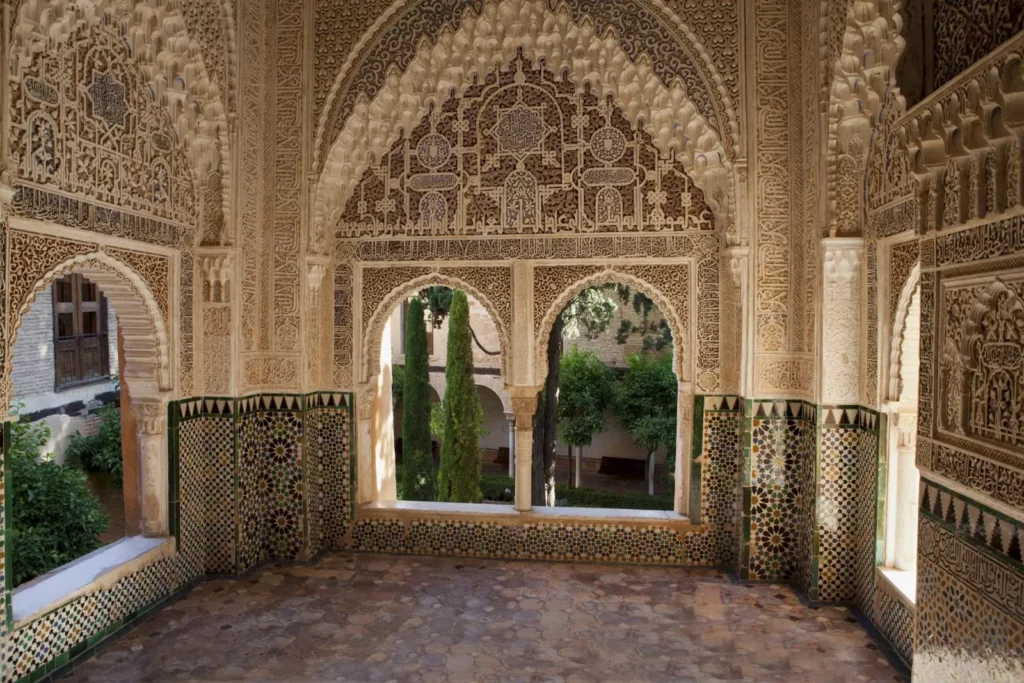
- Hall of the Two Sisters (north): the most spectacular muqarnas dome, and the way to the Mirador de Lindaraja.
More on these rooms in the Nasrid Palaces room by room and muqarnas explained.
Tips to enjoy the Court of the Lions
- It is the busiest point of the visit. Do not rush: walk the gallery, stop in the halls and come back to the courtyard from a different angle.
- The fountain is surrounded by a protective barrier; enjoy it from the edge of the gallery.
- The best light is in the morning, when the sun slides across the columns. See the best time to visit.
- At night, the Nasrid Palaces night visit shows the court lit and silent: the night visit.
On our guided tours, the Court of the Lions is the moment when everything you have heard during the visit comes together.