How has the Alhambra survived centuries of earthquakes?
Granada is one of the areas with the most seismic activity in Spain. Small tremors are felt regularly, and the city has suffered strong earthquakes in its history. And yet the Alhambra has been standing on its hill for more than seven hundred years, with its delicate plasterwork and its slender columns. How has it managed? The answer is under the ground and in the walls.
The first reason: the hill
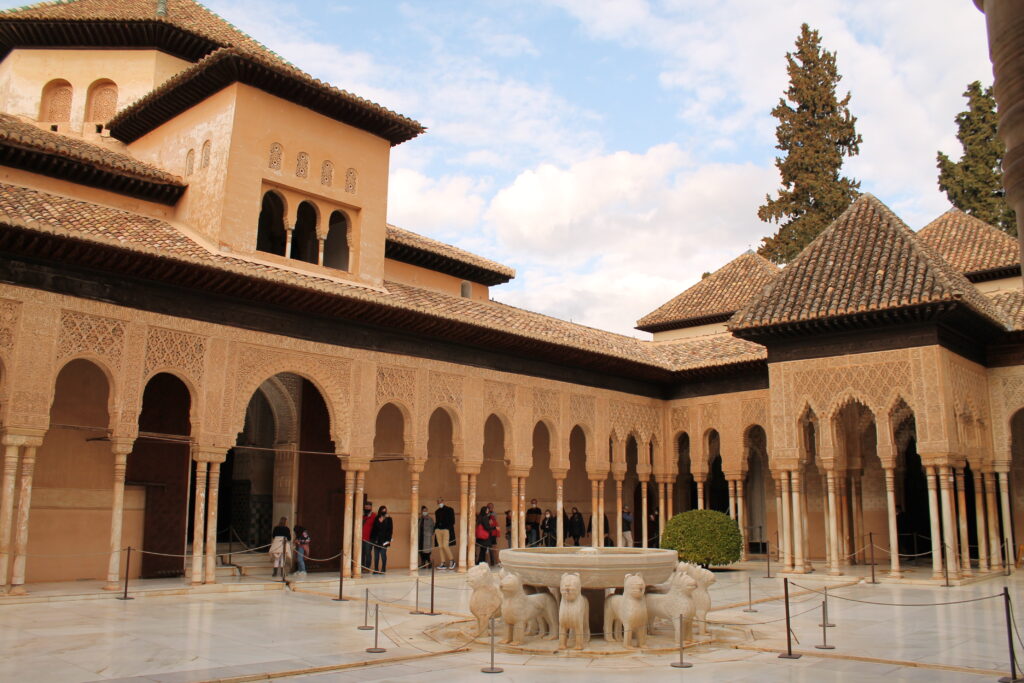
The Alhambra stands on the Sabika hill, a spur of land between the valleys of the Darro and the Genil rivers. Geologists call the rock it is made of the Alhambra Conglomerate: a hard mix of pebbles and boulders cemented by clay and sand, deposited by ancient rivers coming down from Sierra Nevada.
This ground behaves very differently from the soft soils of the Vega, the fertile plain where much of modern Granada stands. Hard, compact ground transmits seismic waves with less amplification than soft sediment, which tends to shake more. The Nasrids chose the hill for defence and for its views, but they also chose, without knowing it, one of the most stable places in the area.
The second reason: how it was built
Rammed-earth walls
Many of the Alhambra’s walls and towers are made of tapial, rammed earth: a mix of earth, lime and gravel compacted layer by layer inside wooden formwork. The result is thick, heavy and surprisingly durable walls, which absorb movement and, when they crack, rarely collapse all at once. You can still see the holes left by the formwork beams in the walls of the Alcazaba.
Light, flexible roofs
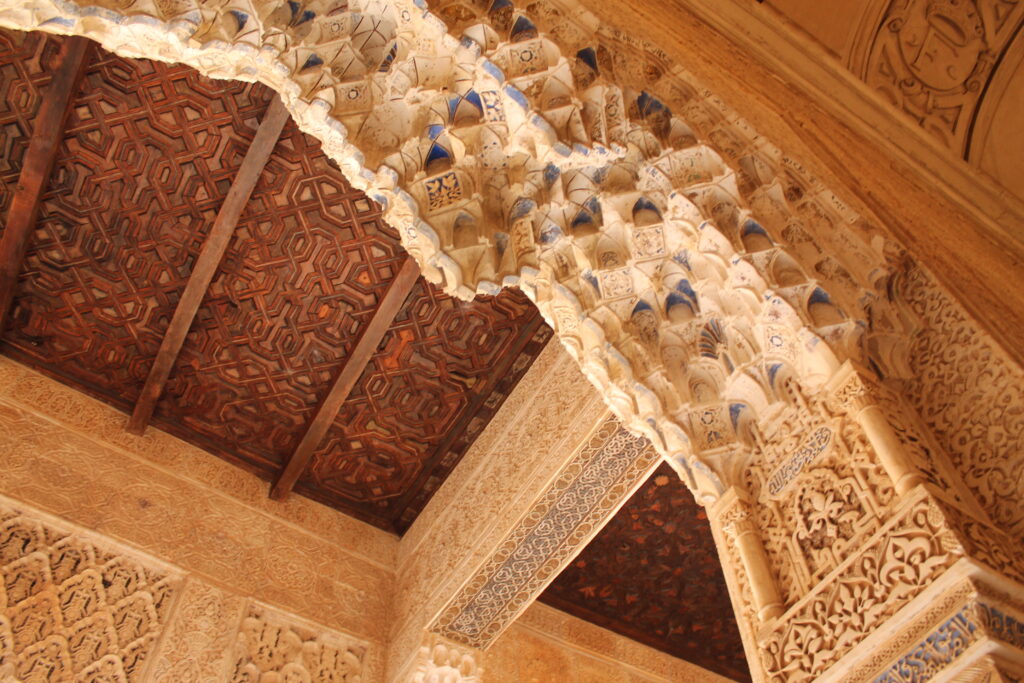
The roofs and ceilings are made of wood, a material that bends a little with each tremor instead of breaking. The famous decorative ceilings, including the muqarnas domes, are made of small pieces of plaster or wood hung from a light timber structure: they weigh much less than a stone vault and adapt to movement.
Decoration that is not structural
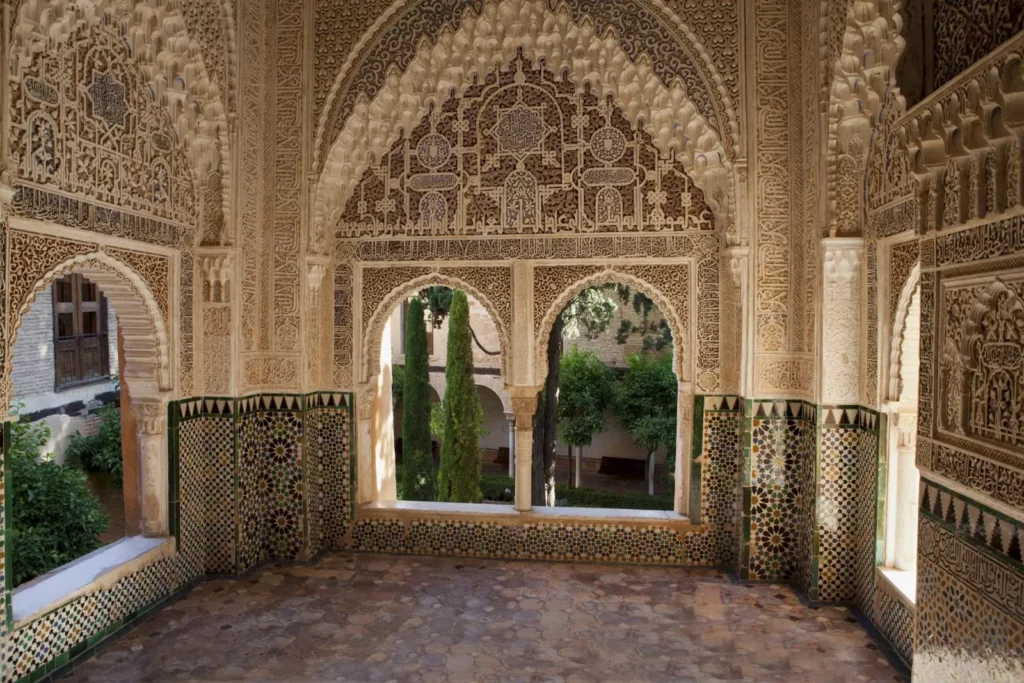
The plasterwork that covers the walls is a skin, not the skeleton of the building. When it cracks, it can be repaired without touching the structure, and that is exactly what has been done for centuries.
It is not luck. It is geology, craft and seven centuries of knowing how to bend without breaking.
What did damage the Alhambra
Ironically, the worst damage did not come from the earth but from people. Abandonment in the 18th century, and above all the Napoleonic troops, who in 1812, as they withdrew from Granada, blew up several towers of the walls. Granada still tells the story of a soldier who cut the fuses and saved the rest of the monument. Earthquakes have caused cracks and repairs, but the palaces are still standing.
A monument that is cared for every day
Today the Patronato de la Alhambra y Generalife monitors and restores the monument constantly: walls, roofs, plasterwork, gardens and water systems. Part of the reason why tickets are limited, and why the Nasrid Palaces work with time slots, is precisely to protect such a fragile and valuable building. More in why Alhambra tickets sell out.
See it with your own eyes
On our guided tours, the guides point out the rammed-earth walls of the Alcazaba, the wooden ceilings and the hidden structures of the domes. Once you know how the Alhambra was built, you understand why it has lasted. Keep reading: the legends of the Alhambra.